Thursday, December 30, 2010
We headed to Jordan's Furniture in Avon today to check out the Enchanted Village. Jordan's purchased the old Jordan Marsh Christmas window displays and spent some time restoring them and opened the display to the public for the first time this year. We heard about this back in early November and wanted to get down there to see the windows before the holidays were over. It's a good thing we headed there today since the exhibit closes January 2nd (but will return next year).


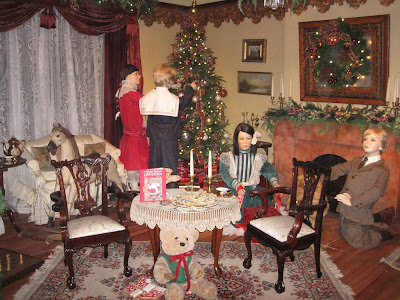


Periodically it would begin to snow inside the exhibit. The girls thought this was fabulous!


It was another wonderful day, another fabulous holiday memory, in this incredible life we live.
Zoe Saldana (pronounced /sælˈdænə/ sal-DAN-ə), also known as Zoë Saldana, Zoe Saldaña, and Zoë Saldaña (born June 19, 1978) is an American actress. She had her breakthrough role in the 2000 film Center Stage, and later gained prominence for her roles as Anamaria in Pirates of the Caribbean: Curse of the Black Pearl, Uhura in the 2009 film Star Trek, and Neytiri in James Cameron's Avatar. In 2010, she appeared in the films The Losers and Takers.


Types of trees
A tree is a living thing which has leaves, branches, a trunk that is wooden and roots. Some trees have fruits or flowers and are tall in height.Trees are classified according to their features and characteristics. They can be classified as green and non green depending on the leaves. Some trees have leaves that are ever green while others are green and dry up in some seasons. Here is a list of different types of trees.
Deciduous trees:
This one looses its green colour at a certain time in season. They include; black oak and cherry, plane tree, pawpaw among others.
Evergreen trees: Evergreen trees where its leaves are always green despite the climatic condition of the season. They include; pine, cedar and the spruce trees.
A conifer tree:A conifer tree which leaves are needle like and are evergreen but bear cones. The examples are; bald cypress, pine, spruce and cedar. They have been in existence for more than 290 million years and are grown all over the world. They lead in producing renewable resources.
Oak trees: These are hard wood trees and have clustered flowers. They are mostly identified by the fruit they bear called acorn. They grow in wet or high low lands on mountain slopes. The flowers grow during spring shedding big quantities of pollen to the wind.
Ash trees: Ash trees consist of seventy different types of species and are mostly valued for timber and appear in early spring. They produce single fruits called samaras and have long petals and produce sweet gum. Scientists have failed to get a permanent solution to a disease that kills the trees in a period of ten years.
Big trees are those that grow up to a height of forty feet and provide shelter or protection. They include; sweet gum, oak among others.
Willow trees: These grow in moist areas like river banks and grow very fast. Their leaves provide food for wild animals while others are used in making ornaments. Its wood is also used for different purposes. They have male and female flowers which lack sepals and petals.
Shade trees: Shade trees are commonly known to provide shade and protection from direct sunlight. They have big leaves and many branches that are close to each other which enable the trees provide a good shade.
Olive trees: These are known for their sweet fruits and wood. They have white flowers and have a small green fruit that turns blue or purple when ripe. However before the fruit can be eaten it is recommended that it is prepared well because it contains acid. The fruit is also used as a fat since oil is extracted from it.
So whatever the type of tree you choose to plant, you should look at the climate that will favour it according to its characteristics.Diseases in trees
There are over 20 tree diseases that contribute to health decline and death of most of the trees in the United States. This list of tree diseases causes most tree health problems and death. These diseases are the cause of significant replacement expense of yard trees and the commercial expense of future losses of forest products.
1. American Chestnut Blight:
Chestnut blight is a fungus that has virtually wiped out the American chestnut, as a commercial species, from eastern hardwood forests. Although roots from trees cut or killed many years ago continue to produce sprouts that survive to the sapling stage before being killed, there is no indication that a cure for this disease will be found. The fungus is widespread and continues to survive as a nonlethal parasite on chinkapin, Spanish chestnut, and post oak.
2. Amillaria Root Rot:
The disease attacks hardwoods and softwoods and kills shrubs, vines, and forbs in every state. It is pervasive in North America, commercially destructive, a major cause of oak decline. The Armillaria sp. can kill trees that are already weakened by competition, other pests, or climatic factors. The fungi also infect healthy trees, either killing them outright or predisposing them to attacks by other fungi or insects.
3. Anthracnose and Leaf Spot Diseases:
Anthracnose diseases of hardwood trees are widespread throughout the Eastern United States. The most common symptom of this group of diseases is dead areas or blotches on the leaves. The diseases are particularly severe on American sycamore, the white oak group, black walnut and dogwood. The greatest impact of anthracnose is in the urban environment. Reduction of property values result from the decline or death of shade trees.
4. Annosus Root Rot:
The disease is a rot of conifers in many temperate parts of the world. The decay, called annosus root rot, often kills conifers. It occurs over much of the Eastern U.S. and is very common in the South. The fungus,Fomes annosus, usually enters by infecting freshly cut stump surfaces. That makes annosus root rot a problem in thinned pine plantations. The fungus produces conks that form at the root collar on roots of living or dead trees and on stumps or on slash.
5. Aspen Canker:
Quaking aspen (Populus tremuloides Michx.) is one of the most well-known and widespread tree species in the western United States. Several wound-invading fungi cause the majority of damage to aspen. The taxonomy of some of these organisms has changed in recent years and several scientific and common names are in use.
6. Bacterial Wetwood (slime flux):
Slime flux is a major bole or trunk rot. The tree is trying its best to compartmentalize off the damage. "Weeping" sap from the rotting point is what you are seeing. This bleeding is a protective slow, natural draining effect on a destructive organism that needs a dark, damp environment with favorable culturing conditions at summer temperatures. One interesting thing is that the weeping liquid is fermented sap, is alchohol based and toxic to new wood.
7. Beech Bark Disease:
Beech bark disease causes significant mortality and defect in American beech, Fagus grandifolia (Ehrh.). The disease results when bark, attacked and altered by the beech scale, Cryptococcus fagisuga Lind., is invaded and killed by fungi, primarily Nectria coccinea var. faginata.
8. Brown Spot in Longleaf Pine:
Brown-spot needle blight, caused by Scirrhia acicola (Dearn.) Siggers, delays growth and causes mortality of longleaf pine (Pinus palustris Mill.). Brown spot reduces total annual growth of southern pines by more than 16 million cubic feet (0.453 million cubic meters) of timber. Damage is most severe on longleaf seedlings in the grass stage.
9. Canker Rot:
Canker-rot fungi cause serious degrade and cull in hardwoods, especially the red oaks. Heartwood decay is the most serious form of damage, but the fungi also kill the cambium and decay the sapwood for as much as 3 feet above and below the canker point into the tree. Canker-rots are most important on the red oaks, but also occur on hickory, honeylocust, some white oaks, and other hardwoods.
10. Commandra Blister Rust:
Comandra blister rust is a disease of hard pines that is caused by a fungus growing in the inner bark. The fungus (Cronartium comandrae Pk.) has a complex life cycle. It infects hard pines but needs an alternate host, an unrelated plant, to spread from one pine to another.


Sia Furler, ou simplesmente Sia, é uma cantora pop australiana que ficou muito conhecida devido suas colaborações com uma banda chamada Zero 7. Recentemente Sia trabalhou na produção do álbum Bionic de Christina Aguilera, inclusive algumas canções do álbum foram compostas por Sia, incluindo a belíssima "You Lost Me".
We Are Born é o quarto álbum de trabalho da australiana, lançado em Junho de 2010 sendo considerado mais otimista que seu álbum anterior. O álbum estreou no número #2 dos charts australianos e ganhou dois BRIT Awards nas categorias Melhor Album Pop e Melhor Lançamento Independente. Os singles de We Are Born foram: "You've Changed", "Clap Your Hands", "Stop Trying", "Bring Night" e "I'm in Here".
Muitos leitores me solicitaram encartes da Sia e até alguns pensaram que eu me confundi Sia com M.I.A., mas não! Eu sei muito bem a diferença entre as duas e é por isso que estou postando agora para todos que pediram encartes desta cantora, inclusive o leitor Marcelo.


The Breakthrough foi o sétimo álbum da carreira de Mary J. Blige, lançado em Dezembro de 2005, o qual se tornou um álbum histórico para o R&B. Estreando na primeira posição do Hot 200 Album da Billboard, The Breakthrough vendeu mais de um milhão de cópias em apenas duas semanas, tornando-se o quinto álbum mais vendido na semana de lançamento para uma artista feminina e a quarta maior estréia de 2005.
O primeiro single "Be Without You" fez um grande sucesso nos charts de música Pop e de R&B, bantendo um recorde por permanecer em execução por 15 semanas consecutivas ,chegando a ocupar o número #3 no Hot 100 da Billboard. "Enough Cryin", que conta com a participação de Will.i.am, não teve o mesmo sucesso, mas conseguiu se colocar na posição #2 dos charts de R&B, enquanto o terceiro single "Take Me As I Am" garantiu a posição #3. O álbum ainda contém a faixa "One" que é um cover da banda U2 e que Mary teve a honra de gravar a canção juntamente com Bono Vox e seus companheiros.
Em 2006, Mary J. Blige recebeu oito indicações ao Grammy levando três estatuetas para casa de "Melhor Performance Vocal Feminina de R&B", "Melhor Canção R&B" (ambas por "Be Without You"), e "Melhor Álbum R&B" por The Breakthrough.
O encarte traz um super pôster da Diva, com fotos dignas de versão de luxo. Esse pedido foi feito pelo leitor Jorge Salhani. Valeu mocinho!





Subscribe to:
Posts (Atom)